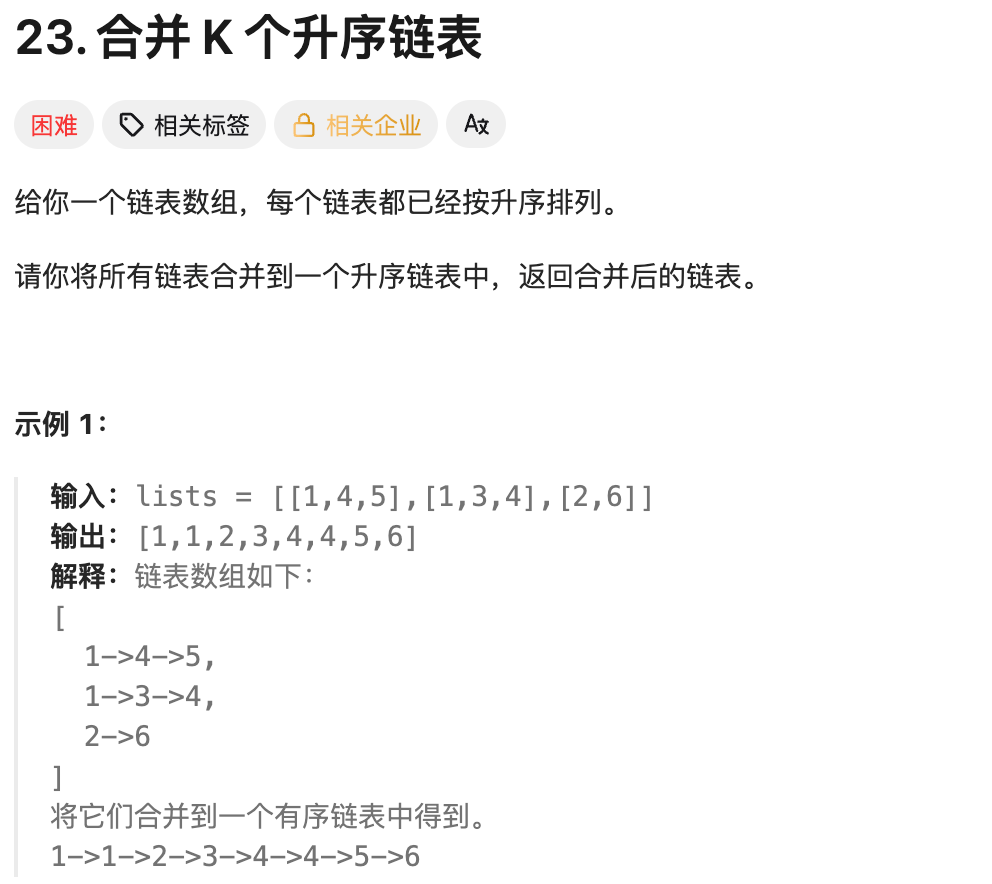
题目

思路

  1. 如何高效地选择最小节点 1.1. 归并排序 1.2. 小顶堆

Java 实现

 1
 2
 3
 4
 5
 6
 7
 8
 9
10
11
12
13
14
15
16
17
18
19
20
21
22
23
24
25
26
27
28
class Solution {
    public ListNode mergeKLists(ListNode[] lists) {
        if (lists == null || lists.length == 0) {
            return null;
        }

        PriorityQueue<ListNode> pq = new PriorityQueue<>((a, b) -> a.val - b.val);

        for (ListNode node : lists) {
            if (node != null) {
                pq.offer(node);
            }
        }

        ListNode dummy = new ListNode(0), tail = dummy;

        while (!pq.isEmpty()) {
            ListNode min = pq.poll();
            tail.next = min;
            tail = min;
            if (min.next != null) {
                pq.offer(min.next);
            }
        }
        tail.next = null;
        return dummy.next;
    }
}
 1
 2
 3
 4
 5
 6
 7
 8
 9
10
11
12
13
14
15
16
17
18
19
20
21
22
23
24
25
26
27
28
29
30
31
32
33
34
35
36
class Solution {
    public ListNode mergeKLists(ListNode[] lists) {
        if (lists == null || lists.length == 0) {
            return null;
        }

        return mergeRange(lists, 0, lists.length - 1);        
    }

    private ListNode mergeRange(ListNode[] lists, int l, int r) {
        if (l == r) {
            return lists[l];
        }
        int m = l + (r - l) / 2;
        ListNode left = mergeRange(lists, l, m);
        ListNode right = mergeRange(lists, m + 1, r);
        return mergeTwo(left, right);
    }

    private ListNode mergeTwo(ListNode a, ListNode b) {
        ListNode dummy = new ListNode(0), tail = dummy;
        while (a != null && b != null) {
            if (a.val <= b.val) {
                tail.next = a;
                a = a.next;
            }
            else {
                tail.next = b;
                b = b.next;
            }
            tail = tail.next;
        }
        tail.next = (a != null) ? a : b;
        return dummy.next;
    }
}