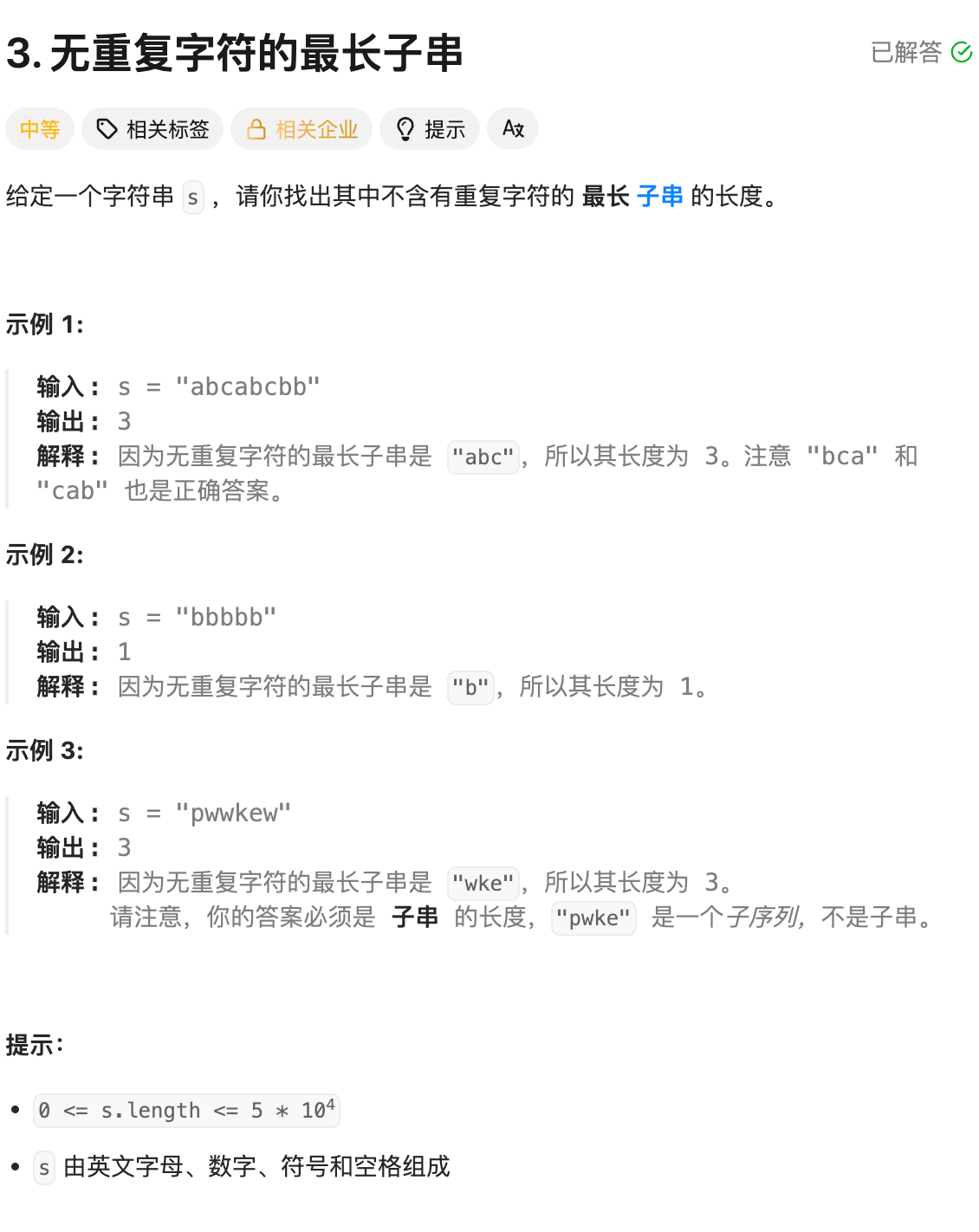
for 滑动窗口循环遍历,每次遍历以 l 为起点,r 为终点的滑动窗口是否包含重复字符,如果包含,则 l++,否则不停移动 r。
同样,也可以遍历以 r 为重点的滑动窗口。
Java 解法#
 1
 2
 3
 4
 5
 6
 7
 8
 9
10
11
12
13
14
15
16
17
18
19
20
| class Solution {
public int lengthOfLongestSubstring(String s) {
Map<Character, Integer> last = new HashMap<>();
int ans = 0;
int left = 0;
for (int right = 0; right < s.length(); right++ ) {
char c = s.charAt(right);
if (last.containsKey(c) && last.get(c) >= left) {
left = last.get(c) + 1;
}
last.put(c, right);
ans = Math.max(ans, right - left + 1);
}
return ans;
}
}
|
以 l 为边界的解法:
 1
 2
 3
 4
 5
 6
 7
 8
 9
10
11
12
13
14
15
16
17
18
| class Solution {
public int lengthOfLongestSubstring(String s) {
Set<Character> set = new HashSet<>();
int ans = 0;
int left = 0;
for (int right = 0; right < s.length(); right ++) {
char c = s.charAt(right);
while (set.contains(c)) {
set.remove(s.charAt(left));
left ++;
}
set.add(c);
ans = Math.max(ans, right - left + 1);
}
return ans;
}
}
|
int[128] 解法:
 1
 2
 3
 4
 5
 6
 7
 8
 9
10
11
12
13
14
| class Solution {
public int lengthOfLongestSubstring(String s) {
int[] last = new int[128];
int ans = 0;
int left = 0;
for (int right = 0; right < s.length(); right ++) {
int c = s.charAt(right);
left = Math.max(left, last[c]);
ans = Math.max(ans, right - left + 1);
last[c] = right + 1;
}
return ans;
}
}
|
Python#
 1
 2
 3
 4
 5
 6
 7
 8
 9
10
11
12
13
| class Solution:
def lengthOfLongestSubstring(self, s: str) -> int:
last = {}
left = 0
ans = 0
for right, ch in enumerate(s):
if ch in last and last[ch] >= left:
left = last[ch] + 1
last[ch] = right
ans = max(ans, right - left + 1)
return ans
|
 1
 2
 3
 4
 5
 6
 7
 8
 9
10
11
12
13
| class Solution:
def lengthOfLongestSubstring(self, s: str) -> int:
seen = set()
left = 0
ans = 0
for right, ch in enumerate(s):
while ch in seen:
seen.remove(s[left])
left += 1
seen.add(ch)
ans = max(ans, right - left + 1)
return ans
|
 1
 2
 3
 4
 5
 6
 7
 8
 9
10
11
12
13
14
15
16
17
18
19
20
| /**
* @param {string} s
* @return {number}
*/
var lengthOfLongestSubstring = function(s) {
const last = new Map();
let left = 0;
let ans = 0;
for (let right = 0; right < s.length; right ++) {
const ch = s[right];
if (last.has(ch) && last.get(ch) >= left) {
left = last.get(ch) + 1;
}
last.set(ch, right);
ans = Math.max(ans, right - left + 1);
}
return ans;
};
|
 1
 2
 3
 4
 5
 6
 7
 8
 9
10
11
12
13
14
15
16
17
18
19
20
21
| /**
* @param {string} s
* @return {number}
*/
var lengthOfLongestSubstring = function(s) {
const seen = new Set();
let left = 0;
let ans = 0;
for (let right = 0; right < s.length; right ++) {
const ch = s[right];
while (seen.has(ch)) {
seen.delete(s[left]);
left ++;
}
seen.add(ch);
ans = Math.max(ans, right - left + 1);
}
return ans;
};
|
 1
 2
 3
 4
 5
 6
 7
 8
 9
10
11
12
13
14
15
16
17
| func lengthOfLongestSubstring(s string) int {
last := make(map[byte]int)
left, ans := 0, 0
for right := 0; right < len(s); right ++ {
ch := s[right]
if idx, ok := last[ch]; ok && idx >= left {
left = idx + 1
}
last[ch] = right
if right - left + 1 > ans {
ans = right - left + 1
}
}
return ans
}
|
 1
 2
 3
 4
 5
 6
 7
 8
 9
10
11
12
13
14
15
16
17
18
| func lengthOfLongestSubstring(s string) int {
seen := make(map[byte]bool)
left, ans := 0, 0
for right := 0; right < len(s); right ++ {
ch := s[right]
for seen[ch] {
seen[s[left]] = false
left ++
}
seen[ch] = true
if right - left + 1 > ans {
ans = right - left + 1
}
}
return ans
}
|