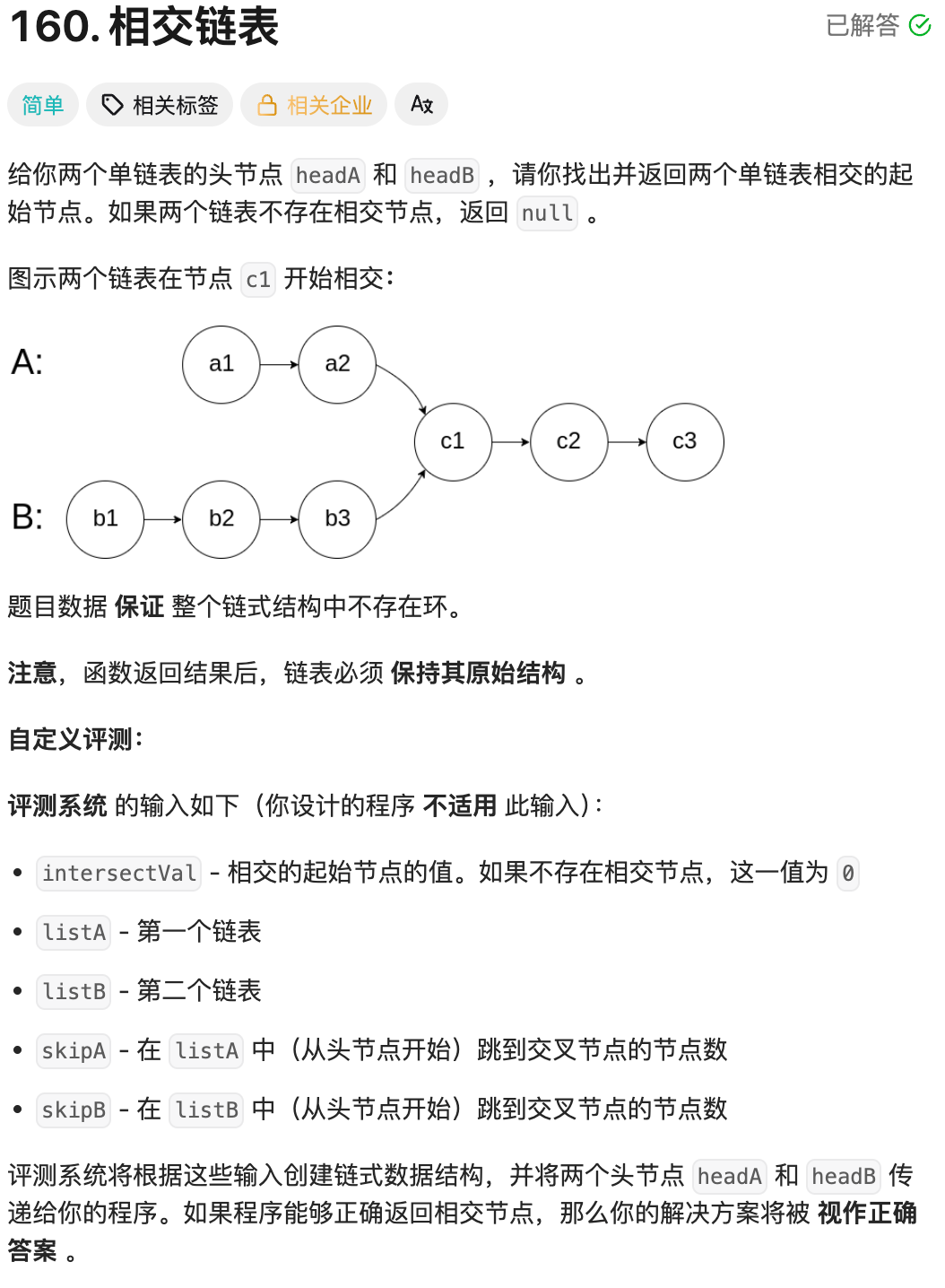
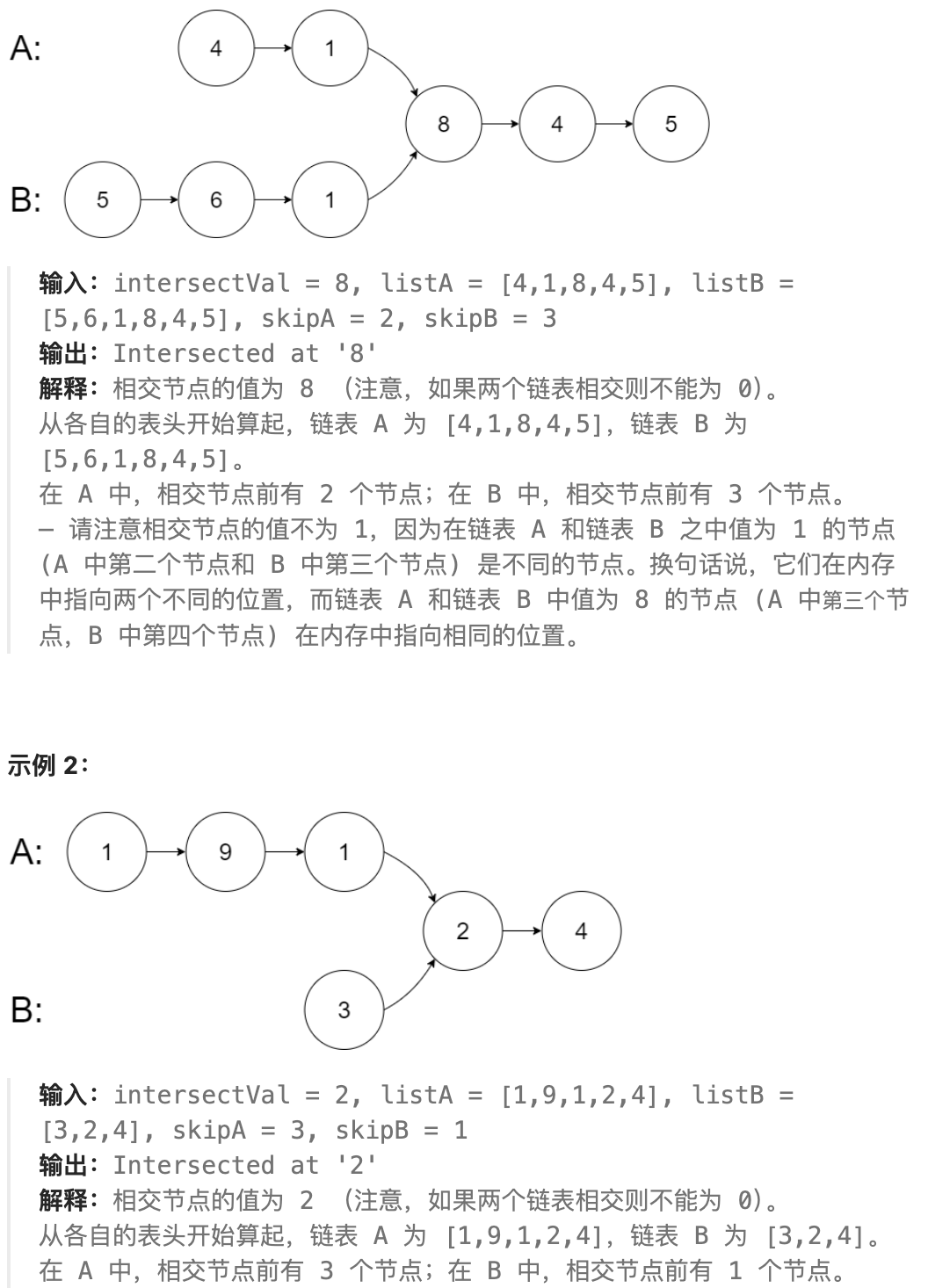
用两个指针 pA 指向 headA,pB 指向 headB,每次都走一步,当某个指针走到 null 时,让它跳到另外一个链表的头,直到相交。
Java 解法#
 1
 2
 3
 4
 5
 6
 7
 8
 9
10
11
12
13
14
| public class Solution {
public ListNode getIntersectionNode(ListNode headA, ListNode headB) {
if (headA == null || headB == null) {
return null;
}
ListNode pA = headA, pB = headB;
while (pA != pB) {
pA = (pA == null) ? headB : pA.next;
pB = (pB == null) ? headA : pB.next;
}
return pA;
}
}
|
Python 解法#
 1
 2
 3
 4
 5
 6
 7
 8
 9
10
11
| class Solution:
def getIntersectionNode(self, headA: ListNode, headB: ListNode) -> Optional[ListNode]:
if headA is None or headB is None:
return None
pA, pB = headA, headB
while pA is not pB:
pA = headB if pA is None else pA.next
pB = headA if pB is None else pB.next
return pA
|
Js 解法#
 1
 2
 3
 4
 5
 6
 7
 8
 9
10
11
12
| var getIntersectionNode = function(headA, headB) {
if (headA === null || headB === null) {
return null;
}
let pA = headA, pB = headB;
while (pA !== pB) {
pA = (pA === null) ? headB : pA.next;
pB = (pB === null) ? headA : pB.next;
}
return pA;
};
|
Go 解法#
 1
 2
 3
 4
 5
 6
 7
 8
 9
10
11
12
13
14
15
16
17
18
19
20
21
22
| func getIntersectionNode(headA, headB *ListNode) *ListNode {
if headA == nil || headB == nil {
return nil
}
pA, pB := headA, headB
for pA != pB {
if pA == nil {
pA = headB
} else {
pA = pA.Next
}
if pB == nil {
pB = headA
} else {
pB = pB.Next
}
}
return pA
}
|